Posts

Showing posts with the label blood cells

Biohacking is the term for biological research carried out in tiny labs by an individual or a small group of people.

Image
  Biohacking Citizen or do-it-yourself biology is a term used to describe biohacking. For many "biohackers," this entails making minor, gradual modifications to one's diet or lifestyle in order to improve one's health and well-being. From rapid weight reduction to improved brain function, biohacks offer it all. However, the finest biohacking outcomes come from knowing what works for your body and being cautious about what doesn't. To improve energy and vitality, Biohacking your body entails altering your chemistry and physiology using science and self-experimentation. It's a broad term, but that's due to the fact that the notion is always changing. "What is biohacking?" can be answered in a variety of ways, including: ·         Lifestyle and Dietary Changes- Yoga and meditation, eating well, spending time in nature, finding exercise you love, sleeping well, and taking biohacking supplements are some of the more conventional practises that ...
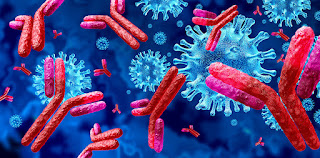
Antibodies are specialised, Y-shaped proteins that attach to foreign invaders in the body, whether they be viruses, bacteria, fungus, or parasites, like a lock and key.

Image
  Antibodies Antibodies are immune system proteins that circulate in the bloodstream and identify and kill foreign entities such as bacteria and viruses. Antibodies circulate in the bloodstream after exposure to a foreign material termed an antigen, giving protection against subsequent antigen exposures. Antibodies are a type of defensive mechanism used by the host cell. It's produced by a sort of white blood cell known as a B cell. The structure of the antibody is made up of two light chains and two heavy chains, with a hypervariable area at the very tip that permits the antibody to generate numerous types of antibodies that will respond to all of the antigens that will attack the body. Antigens are substances that are alien to the human body. It might be a virus or a bacteria, and in certain situations, it could even be your own body. And so you can have in certain instances where your own body will make antibodies against parts that are part of you. The antigen is bound by ...

What is Cell Expansion? How it take places? What are its consequences?

Image
  Cell growth and expansion is a simple process to understand, but complex in biological systems. Basically, plant growth and development take place at the molecular level: C ell E xpansion , also known as mitosis, involves the separation and duplication of entire sets of cells. Cells may divide into two types: a proton cell that generate the chemical energy ATP; a carbon-based cell that produce carbon dioxide; and an oxygen-based cell that produce oxygen. Because oxygen cell numbers increase with increasing levels of carbon dioxide in the surrounding air, photosynthesis, the process through which plants obtain food through the photosynthesis of food matter taken from the environment, is completed via an exchange of electrons between the plants' chloroplasts (the specific cell responsible for making energy) and the carbon compounds that comprise the exogenous carbon compounds. A.k.a., Photosynthesis. When cells multiply uncontrollably, the result is often an autoimmune reaction: t...