Posts

Showing posts with the label immune system

Immunotherapy Drugs are a major part of the treatment for cancer worldwide

Image
  Immunotherapy Drugs Cancer and infection therapies are based on the idea that the immune system can fight cancer. Normally, the immune system destroys abnormal cells. But, since cancer cells can hide from the immune system, it's difficult for the body to recognize them. Immunotherapy drugs stimulate the immune system to recognize cancer cells and destroy them. These drugs work by stimulating T cells, which are special white blood cells. These immune system cells attack foreign invaders and are crucial in fighting cancer. Immunotherapy Drugs have shown promise in fighting many types of cancer. Many types of cancer respond to Immunotherapy, including melanoma and leukemia. With a single drug, patients have a 30 percent chance of responding to Immunotherapy, while two drugs together can give an 80 percent response rate. Other types of cancers respond to Immunotherapy, including lung, head and neck, and bladder cancer. In fact, Immunotherapy Drugs have recently been approved by the...
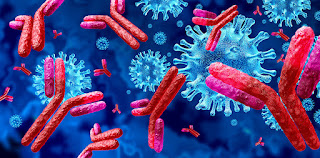

Antibodies are specialised, Y-shaped proteins that attach to foreign invaders in the body, whether they be viruses, bacteria, fungus, or parasites, like a lock and key.

Image
  Antibodies Antibodies are immune system proteins that circulate in the bloodstream and identify and kill foreign entities such as bacteria and viruses. Antibodies circulate in the bloodstream after exposure to a foreign material termed an antigen, giving protection against subsequent antigen exposures. Antibodies are a type of defensive mechanism used by the host cell. It's produced by a sort of white blood cell known as a B cell. The structure of the antibody is made up of two light chains and two heavy chains, with a hypervariable area at the very tip that permits the antibody to generate numerous types of antibodies that will respond to all of the antigens that will attack the body. Antigens are substances that are alien to the human body. It might be a virus or a bacteria, and in certain situations, it could even be your own body. And so you can have in certain instances where your own body will make antibodies against parts that are part of you. The antigen is bound by ...

Vitamin A Helps in Normalizing Vision, Strengthening the Immune System and Aids Reproduction

Image
Vitamin A Vitamin A is essential for healthy skin, eyes, and bones. It is commonly used as an antioxidant, fighting cell damage, but has many other uses. It is essential for normal cell growth and organ formation and is crucial for the health of the immune system. Here are some important benefits of Vitamin A. It is good for vision, skin, and bones. It has many other uses, too. Vitamin A is a fat-soluble vitamin that aids in the reproduction and differentiation of cells. It is essential for good vision, which means that it is critical to ensure a healthy diet. A deficiency in vitamin A can lead to poor night vision and a lack of energy. It is also necessary for the proper development of an embryo. Two sources of Vitamin A are beta-carotene and retinol, which are naturally occurring substances found in plants. Beta-carotene is converted into Vitamin A in the body. Both major carotenoids have photoprotective and antioxidant properties. Although vitamin A is essential for healthy skin,...

What is Hereditary Angioedema? How Hereditary Angioedema can be treated?

Image
Hereditary Angioedema , also known as Idiopathic Congenital Angioedema (IAC) is a progressive, life-threatening disease that affects the blood vessels of the extremities, especially the legs. An estimated 95% of cases are genetic and therefore have no known triggers. Symptoms include excessive sweating, skin rash, leg ulcers, poor lymphatic flow, and swollen ankles. It is often fatal. However, there are treatments available for those suffering from IAC. Limbs, face, intestinal tract, and airway are key areas where it mostly develop. For those who suffer from Hereditary Angioedema , lifestyle changes and treatments (such as a low-salt diet and daily exercise) can help reduce or eliminate symptoms. Doctors may recommend treating patients with a c1 inhibitor, which is a vasodilator that dilates blood vessels. A study on over 900 patients with IAC found that taking a daily low-salt, low-protein, high-fiber, high-water formula (the R-complex) significantly helped relieve IAC symptoms. Stu...