Posts

Showing posts with the label Agrochemicals

Rise in Vector-Borne Disease worldwide is escalating Demand for Household Insecticides

Image
  Household Insecticides With the rising concern over vector-borne diseases, awareness about household insecticides is on the rise. Governments and private healthcare players are making dedicated efforts to tackle these issues. One common type of household insecticide is an aerosol spray. It comes in a trigger-pumps spray applicator and is usually a 0.01% solution. The sprays are either non-residual or residual. They may be applied to surfaces, food, or animals. Household insecticides are also available in aerosol sprays and "bombs," which release a large quantity of insecticide. Household Insecticides are usually applied as liquids and may come in aerosol cans or trigger pump spray applicators. They may be either residual or non-residual. Both are convenient to use and can be effective at controlling pests exposed to human skin and air. However, they cannot be effective in controlling pests that live within the walls, attics, and other areas of the residence. In addition ...

Agrochemicals play a significant role in causing Air Pollution.

Image
  Agrochemicals  The agrochemicals sprayed in agricultural fields fouled the air, which floated out to other locations, posing a harm to animals. Due to the movement of air and ocean currents and the enrichment of biological pesticides, residues of DDT, lindane, and aldrin were identified near the equator in India and at high altitudes in icy locations, including the Greenland ice sheet. According to Vorkamp and Riget (2014), the pesticide organothiophosphate was found in the Arctic region's air and ocean, confirming the long-range transit of these agrochemicals. Agrochemicals are chemical compounds designed specifically for use in agriculture to boost crop output and protect crops against pests, insects, weeds, fungus, and other problems. Agrochemicals can be manufactured using both chemical and biological processes. Synthetic agrochemicals are harmful to the environment and are increasingly being phased out in favour of bio-based insecticides and fertilisers. Pesticide me...

Agrochemicals sprayed on agricultural fields are suspended in the air and contaminated it, which then drifted to other places, endangering animals.

Image
  Agrochemicals  Agrochemicals are chemical compounds designed specifically for use in agriculture to boost crop output and protect crops against pests, insects, weeds, fungus, and other problems. Chemical and biological approaches can both be used to make agrochemicals. Synthetic agrochemicals are harmful to the environment, and bio-based pesticides and fertilisers are gradually replacing them. According to Coherent Market Insights, The global Agrochemicals market is estimated to surpass US$ 103,383.4 Mn by the end of 2027 in terms of revenue, exhibiting a CAGR of 6.2% during the forecast period (2021 to 2027). Pesticide methods have considerably improved as synthetic chemical manufacturing has progressed to meet the hugely rising worldwide population and the resulting increases in food consumption. Even with the proper use of pesticides, it is estimated that up to 40% of the world's crops are ruined by plant pests and diseases. Chemical fertilisers, herbicides, and ins...

The Growing Preference For Organic Fertiliser Is A Major Impediment To The Growth Of The Global Complex Fertilisers Market

Image
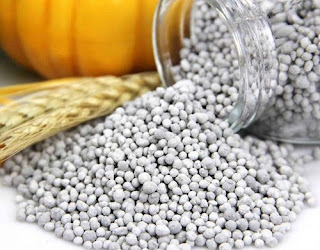
  Compound fertilisers (complex fertilisers) are made by combining two or more types of macronutrient fertilisers. These fertilisers can be combined with trace or secondary nutrients such as calcium, magnesium, and sulphur to provide additional plant nutrients. Granular or liquid complex fertilisers can be distributed and packaged. The growing demand for nutrient-specific fertilisers, combined with the need for high crop yields for biofuel production, is expected to drive growth in the complex fertilisers market over the forecast period. For example, in 2017, the Indian biofuels industry invested US$ 2.25 billion in future projects, with the goal of increasing the industry's value to US$ 7.5 billion by 2022.   However, the growing preference for organic fertiliser is a major impediment to the growth of the global Complex Fertilisers Market . According to a report from the Research Institute of Organic Agriculture (FiBL), organic agricultural activities occupied over 50.9 milli...

The Global Pandemic Has An Impact On Many Businesses Around The World, Including The Agrochemicals Market

Image
Agrochemicals are chemical products designed specifically for use in agriculture to increase crop yield and protect crops from pests, insects, weeds, fungi, and other pests. Agrochemicals can be manufactured using both chemical and biological methods. Synthetic agrochemicals are harmful to the environment and are gradually being phased out in favour of bio-based pesticides and fertilisers. Pesticide processes have vastly improved as a result of advancements in synthetic chemical manufacturing in order to meet the enormously growing global population and the resulting increases in food demand. Despite the effective use of pesticides, it is estimated that up to 40% of the world's crops are ruined by plant pests and diseases.   The world's rising population, combined with rising affluence, is causing a shift in consumption patterns. Not only must production be increased to meet demand, but nutritional needs of an increasingly affluent population must also be met. Wastage results...

The Global Organic Fertilizer Market Is Growing At Cagr Of 7.2% During The Forecast Period (2019-2027).

Image
  Organic fertilisers are manufactured synthetically and are based on byproducts of crude oil refining as well as certain other mined and naturally occurring minerals. These fertilisers replenish the soil and improve crop quality and quantity. The use of synthetic fertilisers, on the other hand, poses a risk of contamination due to leaching into groundwater and surface water bodies, as well as the transfer of synthetic residues into the food chain. This can have a negative impact on both human and animal health. To ensure optimal nutrition, the soil is replenished with additional fertilisers, which supply nitrogen, phosphorous, and potassium, among other essential nutrients.   The global Organic Fertilizer Market is projected to reach around us$ 12.5 billion by the end of 2027, in terms of revenue, growing at cagr of 7.2% during the forecast period (2019-2027). In response to the increased demand for value-added produce, a large number of organic fertilisers market players ...

Organic Fertilisers Are Regarded To Be A More Environmentally Friendly Option Because They Increase Soil Health

Image
  Organic fertilisers help to loosen the soil, retain more moisture and nutrients, and support the healthy growth of microorganisms, all of which contribute to plant health. Organic fertilisers eliminate the need for pesticides that include both beneficial and hazardous compounds for the soil. Organic fertilisers are made from organic elements like plant and animal waste, with raw materials ranging from cow manure to organic compost. Organic resources used to make organic fertilisers include kelp, guano, bone and blood meals, molasses, and fish emulsions. Organic fertilisers are regarded to be a more environmentally friendly option because they increase soil health.   Mined rock minerals, as well as natural plant and animal resources, are used to make Organic F ertilizers . Manure, guano, dried and powdered blood, ground bone, crushed shells, finely pulverised fish, phosphate rock, and wood are among the constituents. Organic fertilisers are carbon-based fertilisers that a...

The increased demand to improve crop output as a result of rising food security concerns and scarce arable land is propelling the Agrochemicals Market forward

Image
  Chemicals used to improve the production of an agricultural environment are known as agrochemical goods. Pesticides, fertilisers, lime precursors, acidifying and alkalizing agents (all of which are used to change the soil's pH), lime stabilisers, and other nutrients essential for plant growth are examples of agrochemical compounds. These chemicals are commonly used by farmers and are necessary for contemporary agriculture to function. The use of these compounds raises a number of problems, both for the environment and for the human body. The increased demand to improve crop output as a result of rising food security concerns and scarce arable land is propelling the Agrochemicals Market forward. Growing technological advancements are increasing the adoption of innovative and sustainable agricultural techniques, which is moving the market forward once more. The growing global population, combined with the increased use of fertilisers for sustainable farming, is expected to fuel th...

Fipronil is a widely used insecticide in agricultural and household applications to control the growth of various insects

Image
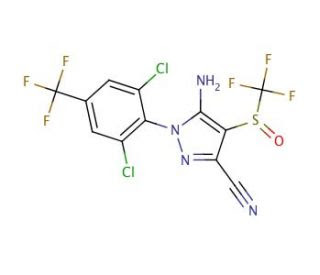
  Fipronil , also known as Imidacloprid, is an anti-parasitic insecticide that belongs to the antifungal chemical class. Fipronil affects insect nervous systems by blocking the voltage-operated chloride channels and gamma-amino butyric acid (GABA) channels. This causes hyper-excitement of affected insects' muscles and nerves. Fipronil insecticides have also been found to be fatal in lab animals. Fipronil belongs to the nitrofurantoin family of pesticides. The chemical compound generates toxic compounds that destroy the insect’s nervous system, which results in death or paralysis of the insect exposed to fipronil. There are several species of mosquitoes which can be affected by Fipr l oni , such as Aedes Aegypti, Aedes icterohaemorrhagiae, and Aedes botulata. It is believed that fipronil causes fatal cases of botulism in the larvae of these species of mosquitoes. Since botulism is caused by a type of amyloid protein, this means that exposing larvae to high concentrations of fipron...

Transfluthrin; Widely Used As Fast Acting Insecticide and Liquid Mosquito Repellent​

Image
  Transfluthrin is an ultra-fast-acting synthetic pyrethroid insecticide with very low persistence. It is widely used in the indoor environment against moths, flies, cockroaches, and mosquitoes. In fact, it is structurally similar to the organic pyrethrin, which is popularly used for its insecticidal properties. Transfluthrin is a relatively volatile substance, may cause symptoms of poisoning, such as irritation, sneezing, skin allergies, convulsions, tremor, tremor, nervousness, anxiety, and running nose. According to the World Health Organization (WHO), Transfluthrin is a fast acting insecticide. It is used in household and hygiene products, mainly against flying insects, such as moths, flies, cockroaches, and mosquitoes. At present, insecticides are increasingly more frequently applied to control household pests, flies, mosquitoes, termites and other harmful insects. Thus, there is an increasing demand for transfluthrin all around the world, especially in Asia Pacific (APAC),...

Increasing Demand for Food Worldwide Is Expected To Propel Growth of Aquaponics Market

Image
  Aquaponics refers to an agricultural system, which pairs hydroponics with aquaculture (farming raising aquatic animals like fish, crustaceans, snails or red shrimp in tanks) through an aquaculture system. This setup combines the best aspects of both aquaculture and hydroponics. In hydroponics, plants are grown in nutrient-rich media and hydroponics equipment is used to provide the nutrients needed by the plants. The two systems complement each other and work hand in hand to ensure an efficient and effective food production. Thus, increasing demand for food is expected to propel growth of the aquaponics market. Aquaponics is not a new idea; however, with the widespread popularity of aquaculture worldwide, it has gained ground and become more popular as of late, thereby aiding in growth of the aquaponics market. Aquaponics is basically a two-stage system. One being a growing medium (gravel, peat, etc.) that is planted within a permeable tube, containing fish or aquatic plants. Th...