Antibodies are specialised, Y-shaped proteins that attach to foreign invaders in the body, whether they be viruses, bacteria, fungus, or parasites, like a lock and key.
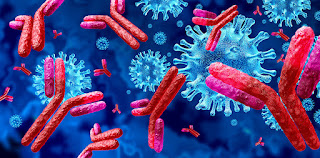
Antibodies Antibodies are immune system proteins that circulate in the bloodstream and identify and kill foreign entities such as bacteria and viruses. Antibodies circulate in the bloodstream after exposure to a foreign material termed an antigen, giving protection against subsequent antigen exposures. Antibodies are a type of defensive mechanism used by the host cell. It's produced by a sort of white blood cell known as a B cell. The structure of the antibody is made up of two light chains and two heavy chains, with a hypervariable area at the very tip that permits the antibody to generate numerous types of antibodies that will respond to all of the antigens that will attack the body. Antigens are substances that are alien to the human body. It might be a virus or a bacteria, and in certain situations, it could even be your own body. And so you can have in certain instances where your own body will make antibodies against parts that are part of you. The antigen is bound by ...