Posts

Showing posts with the label preservatives

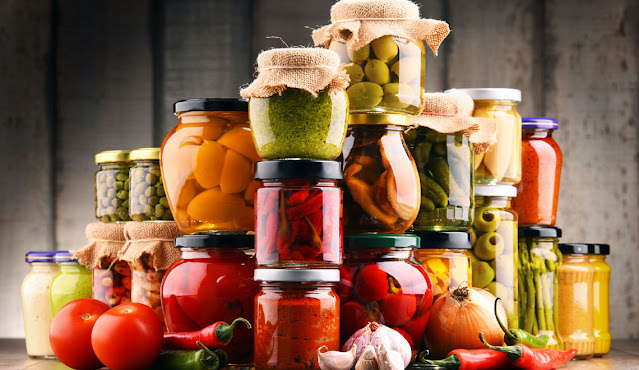
Preservatives Help Keep the Food Products Fresh for Longer and Extend Its Shelf Life
Image
  Preservatives  Preservatives are chemicals or substances added to food products, beverages, drugs, cosmetics, paints, and wood to prevent microbial growth and unwanted changes in terms of both chemical and physical properties. Along with emulsifying and stabilizing agents, preservatives also help to maintain freshness of appearance and consistency. Preservatives are of two kinds, such as natural and synthetic, both are used to enhance the quality of the end product. Natural once are naturally derived additives used in a wide range of products. Natural Preservatives also help preserve natural characteristics of food and increase the shelf life of food products for storage. Artificial or synthetic preservatives are added to food, sprayed on the outside of food, or added to certain medications to slow down discoloration, spoilage, or contamination by bacteria and other disease organisms. Some of the most popular are sorbic acid, sodium benzoate, butylated hydroxytoluene (BHT...

End goods are preserved by adding Antimicrobial Preservatives to stop Bacteria from growing

Image
  Preservatives  Preservatives are substances or chemicals that are applied to pharmaceuticals, food, drinks, paints, cosmetics, and wood in order to prevent microbial development and undesired physical and chemical changes. There are two types of preservatives: natural and synthetic, both of which are employed to improve the quality of the final product. Antioxidants, vitamin E, rosemary extracts, and seed extracts are all natural preservatives that are frequently sourced from plant sources. Chemical components processed and added to the ultimate product include benzoic acid, sodium nitrite, sulphur dioxide, and potassium sorbate, among others. Growing health concerns among the world's population has resulted in a rise in demand for natural preservatives, which is propelling the preservatives industry forward. Preservatives are becoming more popular as the food sector expands in rising economies such as India and China. Antimicrobial preservatives are preservatives that a...

Nisin; a Food Preservative Helps Improve Food Quality and Reduce Loss of Nutrients

Image
  Nisin is a polycyclic antibacterial peptide produced by a group of Gram-positive bacteria that belongs to Streptococcus and Lactococcus species. Nisin is classified as a Type A (I) antibiotic that is synthesized from mRNA and the translated peptide contains several unusual amino acids due to post-translational modifications. Nisin is a natural, antibacterial, and toxicologically safe preservative. It is usually available as yellowish or greyish white powder. Nisin shows broad-spectrum antibacterial activity against foodborne bacteria, such as Listeria monocytogenes. Nisin is widely used in medicines, cosmetics, beverages, canned food products, fruit juices, fast food, plant proteins, milk and meat products, dairy products, aquatic products, and health care products. Moreover, nisin improves food quality, reduces damage to nutrients, decreases the time required for sterilization, reduce temperature during food sterilization, and prolongs storage duration. Furtherm...