Posts

Showing posts with the label Biology

Know why Animal Genetics are Important?

Image
  Animal Genetics Animal Genetics is a branch of biotechnology that studies genes, genetic variants, and animal heredity. Gene expression, gene variations, reproduction, and characteristics are all investigated. Genetic engineering, often known as recombinant DNA technology, is a technique for modifying genes (adding or removing genes) to produce various combinations. It's used to look for genetic traits, diagnose diseases, and analyze DNA in animals. Avian DNA sexing and illnesses, Canine inherited characteristics and diseases, and Equine coat color and hereditary disorders are all tested at Animal Genetics. Animal Genetics has been providing high-quality, pleasant service to consumers in the United States, Europe, and other parts of the world for over 28 years. Individuals can use our DNA testing services to better understand and control the risk of infectious illnesses and inherited genetic disorders, as well as to improve their breeding programs through genetic screening. M...

Microplate Reader- Several Biological and Chemical Experiments In a Microplate Are Quantified

Image
  Microplate Reader A Microplate Reader is a laboratory tool that measures chemical, biological, or physical reactions, characteristics, and analytes in microplate wells. A microplate is made up of tiny wells where different reactions take occur. The presence of an analyte or the advancement of biological processes are converted into visual signals in these reactions. These signals are detected by the microplate reader, which quantifies the parameter of interest. Scientists in the life sciences and pharmaceutical sectors work to enhance normal laboratory operations and efficiency by employing time-saving devices and tools. In minutes or even seconds, a microplate reader can process up to 3456 samples. A Microplate Reader allows researchers to devote more time to data analysis and the creation of actionable insights by reducing operating time and reducing reagent expenses. Nowadays, the availability of a wide range of reagent kits allows a microplate reader to be used in a vari...

Bioinformatics include convenient and accurate verification of biological data

Image
  Bioinformatics  The term "bioinformatics" refers to the merging of biology and information technology. In bioinformatics, computer software tools are used to create, administer, and develop databases. Data warehousing, data mining, and communication networking all use it. Furthermore, it is frequently utilised in the field of medical research and medication development for the management of biological data. According to Coherent Market Insights, The global Bioinformatics Market is estimated to account for US$ 46,261.2 Mn in terms of value by the end of 2027. The use of computer technology to the administration and analysis of biological data is known as bioinformatics. It comprises biological data storage, analysis, and distribution. Bioinformatics is a branch of computer science that studies gene and protein activities, establishes evolutionary links, and predicts the three-dimensional structures of proteins. However, in the approaching years, high costs of bioinforma...

Biohacking is the term for biological research carried out in tiny labs by an individual or a small group of people.

Image
  Biohacking Citizen or do-it-yourself biology is a term used to describe biohacking. For many "biohackers," this entails making minor, gradual modifications to one's diet or lifestyle in order to improve one's health and well-being. From rapid weight reduction to improved brain function, biohacks offer it all. However, the finest biohacking outcomes come from knowing what works for your body and being cautious about what doesn't. To improve energy and vitality, Biohacking your body entails altering your chemistry and physiology using science and self-experimentation. It's a broad term, but that's due to the fact that the notion is always changing. "What is biohacking?" can be answered in a variety of ways, including: ·         Lifestyle and Dietary Changes- Yoga and meditation, eating well, spending time in nature, finding exercise you love, sleeping well, and taking biohacking supplements are some of the more conventional practises that ...

Computational Biology is a discipline of biology that uses computers and computer science to better understand and simulate biological structures and processes.

Image
Computational biology is a branch of biology that seeks to address the question, "How can we learn and use models of biological systems derived from experimental data?" These models could explain what biological tasks specific nucleic acid or peptide sequences perform, which gene (or genes) produce a specific phenotype or behaviour when expressed, what sequence of changes in gene or protein expression or localization leads to a specific disease, and how changes in cell organisation influence cell behaviour. Computational Biology The development and implementation of data-analytical and theoretical approaches, mathematical modelling, and computational simulation techniques in life sciences is the emphasis of computational biology . A variety of variables contribute to the misconception, including the fact that one of the leading journals in computational biology is called "Bioinformatics," and that computer science is called "informatik" in German whereas...

Stem Cells; Human Cells That Have the Ability to Develop Into Many Different Cell Types

Image
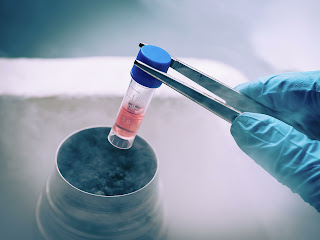
  Stem Cells Stem cells are cells with the potential to develop into many different types of cells in the body, such as brain cells, blood cells, and muscle cells, and serve as a repair system for the body. They are the body's raw materials; cells from which all other cells with specialized functions are generated. Stem cells replace specialized cells that are damaged or lost. Moreover, they can divide over and over again to produce new cells. They are defined as precursor cells that have the capacity to self-renew and to generate multiple mature cell types. Stem cells are a unique and powerful tool for research and medical treatments. These cells help understand human biology as well as develop new strategies for therapy. By creating induced pluripotent stem cells (iPSCs) from the patient’s blood or bone marrow, researchers can study the characteristics of disease. They can also be used to test potential drugs. Moreover, they may help restore some functions, such as the heart...

Non-Invasive Cancer Diagnostics has witnessed wider adoption with both oncologists and cancer patients preferring non-invasive methods

Image
  Non-Invasive Cancer Diagnostics There are many different types of Non-Invasive Cancer Diagnostics available. These tests include the use of a PAP or nasal passage plethoracic device, mammography, magnetic resonance imaging, or CTV. Each one has its own purpose and some of them may be combined to improve accuracy. Non-Invasive Cancer Diagnostics are witnessing wider adoption across the globe. With non-invasive diagnostics, it is possible to examine tissue in its natural state, which allows continued monitoring of the skin site. Mammography is another common diagnostic test. In this test, a tube with light or camera at the end is inserted into the nose and it looks like a tube coming out of the mouth. A machine that makes noises similar to snoring is used to produce images from the inside of the nose. These images are then sent to a lab and a diagnosis is made. This test is used for non-melanoma skin cancer and certain types of bladder cancer. The molecular diagnostic method is a...

Therapeutic Drug Monitoring; Measures the Amount of Certain Drugs in the Blood

Image
  There are plenty of way of Therapeutic Drug Monitoring ; one will be the direct measurement of drug concentrations in a solution. This process is sent applications for the evaluation of the concentration of a particular drug against a regular curve and is incredibly helpful for measurements of concentrations over time. This type of therapeutic drug monitoring also can assess the concentration and recovery of administered agents. The recovery of drug concentrations can also be important in providing reliable data for the toxicities of therapeutic drugs in human plasma. Therapeutic Drug Monitoring has several components. The principal element of this discipline will be the development and application of laboratory instruments for determining the concentrations of selected therapeutic drugs in human plasma. The instruments employed in clinical practice comprise analyzers that derive from various kinds of molecular biology processes and are designed for measures of the concentration...